Archives
Categories
Meniscus Injuries

Preserve Your Meniscus. Restore Knee Function. Return to an Active Life.
Meniscus injuries are among the most common knee problems, affecting athletes, active individuals, and people experiencing age-related changes in the knee.
A meniscus tear may occur following a sudden twisting injury, sports-related trauma, deep squatting, or gradual degeneration of the knee joint. Patients may experience pain, swelling, clicking, locking, or difficulty performing everyday activities.
While many meniscus injuries can be managed successfully without surgery, certain tears may require arthroscopic meniscus repair or partial meniscectomy to relieve symptoms and restore knee function.
Treatment focuses on accurately identifying the type of tear, preserving healthy meniscal tissue whenever possible, and restoring knee stability, mobility, and function.
The goal is not simply to treat the tear, but to preserve the natural knee and protect its long term function.
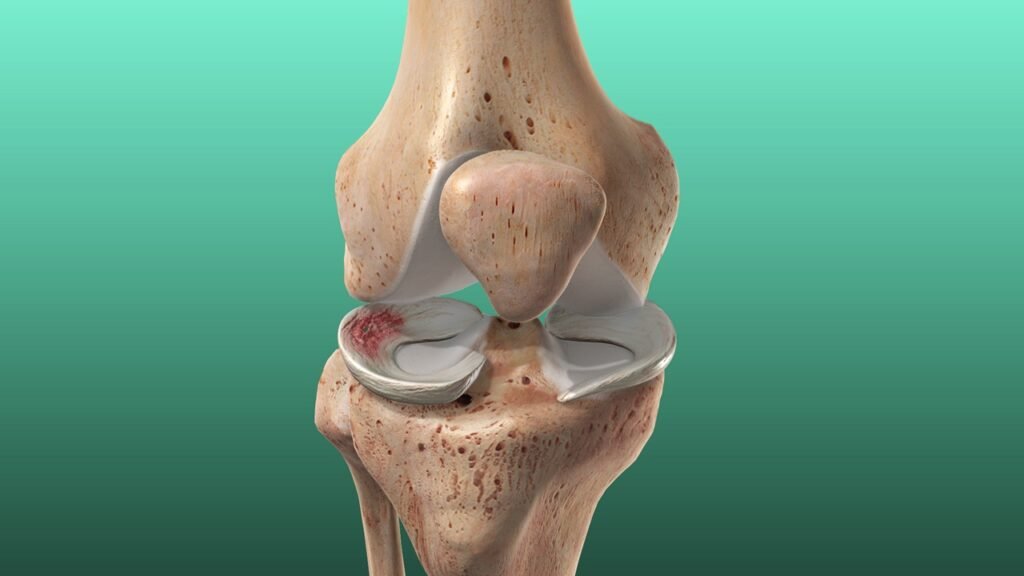
What Is the Meniscus?
The menisci are two crescent-shaped structures made of fibrocartilage, located between the thighbone (femur) and shinbone (tibia).
Each knee contains two menisci:
- Medial Meniscus: Located on the inner side of the knee.
- Lateral Meniscus: Located on the outer side of the knee.
The menisci play an important role in normal knee function by distributing body weight across the joint, absorbing shock, contributing to knee stability, and protecting the surrounding articular cartilage.
When a meniscus is torn or damaged, its ability to distribute forces across the knee may be reduced. Certain injuries can increase stress on the joint cartilage and contribute to progressive joint degeneration over time.
Preserving functional meniscal tissue is an important principle of modern knee surgery, particularly in younger and physically active patients.
What Causes a Meniscus Injury?
Meniscus tears may occur following an acute injury or develop gradually due to degenerative changes within the knee.
Common causes include:
Sports Injuries: Sudden twisting, pivoting, cutting movements, or changes in direction during activities such as football, cricket, basketball, and other sports.
Deep Squatting or Twisting: Forceful bending or rotation of the knee while bearing weight may result in a meniscus tear.
Direct Trauma: Falls, road traffic accidents, or significant knee injuries can damage the meniscus, sometimes alongside other structures.
Degenerative Changes: With increasing age, the meniscal tissue may gradually lose strength and elasticity, making it more susceptible to tearing during routine activities.
Associated Ligament Injuries: Meniscus tears frequently occur alongside ACL injuries and may also be associated with other ligament or cartilage injuries.
Meniscus injuries can occur in people of all ages, and the treatment depends on the nature of the injury, symptoms, underlying joint condition, and individual activity requirements.
What Are the Symptoms of a Meniscus Tear?
Symptoms vary depending on the type, size, location, and severity of the injury.
Patients may experience:
- Pain along the inner or outer side of the knee.
- Swelling following an injury or physical activity.
- Clicking, catching, or painful sensations during knee movement.
- Difficulty squatting, kneeling, or climbing stairs.
- Pain while twisting or changing direction.
- Reduced knee movement or stiffness.
- Difficulty fully straightening or bending the knee.
- A sensation that the knee is giving way.
- Episodes of knee locking.
- Difficulty running or participating in sports.
Some meniscus tears cause relatively mild symptoms, while displaced tears may significantly restrict knee movement.
A knee that becomes genuinely locked and cannot be fully straightened requires prompt orthopaedic evaluation, as a displaced meniscal tear or another mechanical obstruction may be present.
How Is a Meniscus Injury Diagnosed?
A detailed clinical examination and appropriate imaging help identify the injury and determine the most suitable treatment.
- Clinical Examination : Your surgeon assesses your symptoms, knee movement, swelling, joint-line tenderness, and ligament stability.
Specific examination techniques, including the McMurray test, may help identify a meniscal injury. - X-rays : Although meniscus tears are not directly visible on routine X-rays, these investigations help assess joint alignment, fractures, arthritis, and associated bony abnormalities.
- MRI Scan : MRI is the preferred imaging investigation when detailed assessment of a suspected meniscus tear is required. It helps identify the location and pattern of the tear, associated ligament injuries, cartilage damage, and other internal knee abnormalities.
However, not every patient requires an MRI, and some meniscal abnormalities seen on imaging may not be responsible for the patient’s symptoms.
The diagnosis and treatment plan are based on your symptoms, clinical examination, and relevant investigations rather than MRI findings alone.
Can a Meniscus Tear Heal Without Surgery?
Yes. Not every meniscus tear requires an operation. Many patients can achieve satisfactory pain relief and functional recovery with appropriate non-surgical management.
The potential for healing depends partly on the location of the tear.
The outer portion of the meniscus has a better blood supply and greater healing potential, while the inner portion has limited vascularity and is less likely to heal spontaneously.
However, even when a tear does not heal completely, symptoms may improve with appropriate rehabilitation.
Non-surgical treatment may include:
- Activity Modification: Temporarily avoiding movements that aggravate symptoms, particularly deep squatting, twisting, or high impact activity.
- Pain and Swelling Management: Ice, appropriate medication, and other measures to reduce discomfort.
- Physiotherapy: Exercises to restore knee movement, improve strength, and regain function.
- Muscle Strengthening: Strengthening the quadriceps, hamstrings, hip, and core muscles to improve lower-limb control.
- Weight Management: Reducing excessive joint loading when appropriate.
- Gradual Return to Activities: Progressive resumption of walking, exercise, and sports according to recovery.
Non-surgical treatment is particularly important for many degenerative meniscus tears, where physiotherapy is generally recommended as the initial approach.
Your surgeon will assess the tear pattern, knee condition, symptoms, and activity requirements before recommending the most appropriate treatment.
When Is Surgery Recommended for a Meniscus Tear?
Surgery may be considered when a meniscus injury causes persistent symptoms, mechanical obstruction, or significant functional limitations, particularly when the tear is suitable for repair.
Common indications include:
- Displaced bucket-handle tears causing a locked knee.
- Symptomatic traumatic meniscus tears suitable for repair.
- Selected complete radial tears affecting meniscal function.
- Meniscal root tears in appropriately selected patients.
- Persistent symptoms despite an adequate course of non-surgical treatment.
- Certain unstable tears causing recurrent mechanical symptoms.
- Meniscus injuries associated with ACL reconstruction or other ligament procedures.
- Selected symptomatic tears involving significant displaced fragments.
Not every meniscus tear identified on MRI requires arthroscopic surgery. The decision depends on the clinical symptoms, tear characteristics, cartilage condition, and overall knee function.
For degenerative meniscus tears associated with osteoarthritis, non-surgical treatment is generally preferred initially, and arthroscopy may not provide additional benefit for many patients.
Restore Knee Function After Meniscus Injury
A meniscus tear can affect knee movement, stability, and everyday activities. Consult Dr. Dhruva Angachekar, an experienced orthopaedic surgeon in Mumbai, for expert assessment and personalised guidance on meniscus repair, arthroscopic treatment, and rehabilitation.
What Are the Surgical Treatment Options for Meniscus Injuries?
Modern meniscus surgery emphasises preserving and repairing meniscal tissue whenever clinically appropriate.
The surgical approach depends on the tear pattern, location, tissue quality, associated injuries, and potential for healing.
- Arthroscopic Meniscus Repair
Meniscus repair involves preserving the torn meniscal tissue and securing it using specialised sutures or fixation devices.
The procedure is generally performed arthroscopically through small incisions around the knee.
Meniscus repair may be considered for selected longitudinal, bucket-handle, radial, horizontal, root, and other repairable tears.
The objective is to allow the meniscus to heal while maintaining its natural shock-absorbing and load-distributing functions.
Although rehabilitation is generally longer following meniscus repair than after partial meniscectomy, preserving meniscal tissue may provide important long-term benefits.
Not every tear is suitable for repair, and healing cannot be guaranteed.
- Arthroscopic Partial Meniscectomy
Partial meniscectomy involves removing the damaged or unstable portion of the meniscus that cannot be adequately repaired while preserving as much healthy tissue as possible.
This procedure may be considered for selected symptomatic, irreparable tears when non surgical management is insufficient or when a displaced fragment requires treatment.
Because tissue is removed rather than repaired, patients generally experience a faster initial recovery compared with meniscus repair.
However, removal of meniscal tissue reduces the knee’s load-distributing capacity and may increase the risk of cartilage degeneration over time.
For this reason, preserving as much functional meniscus as possible remains an important surgical priority.
- Meniscal Root Repair :
Meniscal root tears involve injury to the attachment of the meniscus to the shinbone.
A significant root tear can impair the meniscus’s ability to distribute load, resulting in increased pressure on the joint cartilage.
In appropriately selected patients, arthroscopic root repair may be performed to restore the attachment and improve meniscal function.
The procedure commonly involves securing the torn root to its anatomical attachment using sutures and specialised fixation techniques.
Root repair requires careful patient selection and a more protective rehabilitation programme, particularly during the initial healing period.
- Treatment of Complex and Associated Injuries
Meniscus tears may occur alongside ACL injuries, cartilage damage, or other ligament injuries.
In such cases, treatment may involve a combination of arthroscopic meniscus repair, ligament reconstruction, or selected cartilage procedures.
Certain meniscal injuries, such as ramp lesions associated with ACL tears, may require specialised arthroscopic assessment and repair.
In carefully selected patients with substantial meniscal deficiency, additional reconstructive options, including meniscal transplantation, may be considered.
The surgical plan is tailored to the individual injury, with an emphasis on preserving the meniscus and restoring overall knee function.
How Is Arthroscopic Meniscus Surgery Performed?
Meniscus surgery is commonly performed arthroscopically using a camera and specialised instruments introduced through small incisions around the knee.
The procedure generally involves the following stages.
- Preoperative Evaluation : Your surgeon assesses your symptoms, knee stability, clinical examination findings, and relevant imaging to determine whether surgery is appropriate.
- Surgical Planning : The tear pattern, location, tissue quality, and associated injuries are evaluated to plan meniscus repair or partial meniscectomy when indicated.
- Arthroscopic Assessment : A small camera is introduced into the knee to examine the meniscus, cartilage, ligaments, and surrounding joint structures.
- Treatment of the Meniscus Tear : When repair is appropriate, the torn meniscus is stabilised using specialised sutures or fixation techniques.
If the tear cannot be repaired and removal is indicated, only the damaged or unstable portion is trimmed, preserving the remaining healthy tissue.
- Assessment of Repair and Joint Movement : The surgeon evaluates the stability of the repaired or remaining meniscal tissue and assesses the knee for additional injuries.
- Postoperative Care : Following surgery, patients receive appropriate pain management, wound care, mobility instructions, and a structured rehabilitation programme.
The rehabilitation protocol depends primarily on whether the meniscus has been repaired or partially removed.
What Happens After Meniscus Surgery?
Recovery depends on the type of procedure, severity of the injury, associated ligament or cartilage damage, and individual rehabilitation progress.
Following Partial Meniscectomy
Most patients begin walking shortly after surgery, often bearing weight as tolerated. Many resume routine activities within a few weeks, with progressive strengthening and return to exercise according to recovery.
Following Meniscus Repair
Recovery requires greater protection to allow the repaired tissue to heal.
Depending on the tear pattern and repair technique, patients may require crutches, temporary restrictions on weight-bearing, a brace, or limits on knee bending during the initial weeks.
Rehabilitation following meniscus repair is generally longer than after partial meniscectomy because the repaired tissue requires time to heal.
Your surgeon will explain the expected recovery timeline and any specific restrictions based on the procedure performed.
Rehabilitation After Meniscus Surgery
A structured rehabilitation programme is essential for restoring knee mobility, rebuilding muscle strength, and returning safely to everyday activities and sports.
Rehabilitation differs significantly between meniscus repair and partial meniscectomy.
Rehabilitation After Meniscus Repair
Phase 1: Early Protection (Weeks 0–2)
The initial focus is on protecting the repaired meniscus, controlling pain and swelling, and beginning safe mobilisation.
Rehabilitation may include:
Ice, elevation, and swelling management.
Use of crutches or a brace when prescribed.
Controlled knee movement within the permitted range.
Quadriceps activation and gentle strengthening exercises.
Safe walking according to weight-bearing restrictions.
Protection from deep knee bending, twisting, and excessive loading.
The primary goal is to protect the repair while maintaining early muscle function and controlled knee movement.
Phase 2: Protected Mobility (Weeks 2–6) :
Rehabilitation focuses on gradually restoring movement and muscle control while allowing the repaired tissue to heal.
Activities may include:
Progressive knee range-of-motion exercises.
Quadriceps, hip, and core strengthening.
Controlled walking and gait training.
Gentle balance exercises when permitted.
Gradual progression of weight-bearing according to the repair.
Certain complex, radial, and root repairs may require restricted or non-weight-bearing for approximately 4–6 weeks.
Phase 3: Strengthening and Functional Recovery (Weeks 6–12)
As healing progresses, rehabilitation focuses on restoring muscle strength, walking ability, and functional independence.
Exercises may include:
Progressive quadriceps and hamstring strengthening.
Stationary cycling when appropriate.
Controlled squats and step exercises within permitted ranges.
Balance and proprioception training.
Progressive walking and low-impact cardiovascular exercise.
Deep loaded squatting, twisting, and high-impact activities may remain restricted to protect the repair.
Phase 4: Advanced Strengthening (Months 3–5)
Rehabilitation progresses towards improving lower-limb strength, endurance, and neuromuscular control.
Training may include progressive resistance exercises, single-leg strengthening, functional balance activities, and controlled movement training.
Selected patients may begin a gradual return to running when sufficient healing, strength, movement control, and clinical recovery have been demonstrated.
Phase 5: Return to Sports (Months 5–9 and Beyond)
Sports rehabilitation focuses on restoring strength, agility, coordination, and confidence.
Activities may include:
Progressive running programmes.
Jumping and landing exercises.
Agility and change-of-direction training.
Sport-specific drills.
Functional strength and performance testing.
Return to sports after meniscus repair commonly takes approximately 6–9 months, although complex repairs, root repairs, associated ligament reconstruction, and high demand sports may require longer rehabilitation.
Your surgeon will guide progression based on the healing of the repair, muscle strength, knee stability, and functional assessment.
Rehabilitation After Partial Meniscectomy
Recovery following partial meniscectomy is generally faster because the damaged meniscal fragment has been removed rather than repaired.
Phase 1: Early Recovery (Days 0–7)
Most patients begin walking with weight-bearing as tolerated shortly after surgery.
Rehabilitation focuses on reducing swelling, restoring knee movement, activating the quadriceps, and regaining a comfortable walking pattern.
Phase 2: Functional Recovery (Weeks 1–3)
Patients gradually resume everyday activities as pain and swelling improve.
Exercises focus on muscle strengthening, improving balance, restoring knee movement, and increasing walking endurance.
Phase 3: Strengthening and Return to Exercise (Weeks 3–6)
Progressive resistance training, cycling, walking, balance exercises, and selected functional activities are introduced according to recovery.
Patients may begin more demanding exercise when adequate muscle strength, knee control, and symptom resolution have been achieved.
Phase 4: Return to Sports (Weeks 4–12 and Beyond)
Many patients can progressively return to recreational or sporting activities within approximately 4–12 weeks, depending on their symptoms, strength, functional recovery, and sporting demands.
Higher-demand activities may require additional rehabilitation.
Return to sport should be based on functional recovery rather than time alone.
Important Rehabilitation Considerations
The rehabilitation programme depends on several factors, including:
- Whether the meniscus was repaired or partially removed.
- The tear pattern and location.
- The stability of the repair.
- Associated ligament or cartilage procedures.
- Individual healing and physical condition.
- Occupational requirements and sporting goals.
Your surgeon and physiotherapy team will guide you through a personalised rehabilitation programme, with activity progression and restrictions tailored to your procedure.
“All recovery timelines are approximate. Patients undergoing meniscal root repair, complex repair, ACL reconstruction, or additional procedures may require longer and more protective rehabilitation.”
What Are the Benefits of Meniscus Preservation?
Whenever clinically appropriate, preserving the natural meniscus offers several potential benefits:
- Maintains more of the knee's natural shock absorbing function.
- Helps distribute forces across the joint.
- Preserves joint stability and normal knee mechanics.
- Reduces loss of healthy meniscal tissue.
- May reduce the risk of progressive cartilage damage compared with meniscal removal.
- Supports long-term joint preservation.
Although meniscus repair requires a longer rehabilitation period and carries a risk of incomplete healing or re-tear, preserving functional meniscal tissue is generally preferred over unnecessary removal whenever repair is feasible.
Are There Any Risks Associated With Meniscus Surgery?
As with any surgical procedure, arthroscopic meniscus surgery carries certain risks.
Potential complications include:
- Infection or wound complications.
- Blood clots.
- Persistent pain or swelling.
- Knee stiffness or reduced movement.
- Incomplete healing or failure of a meniscus repair.
- Recurrent meniscus tears.
- Nerve or blood vessel injury.
- Persistent mechanical symptoms.
- Need for additional surgery in selected cases.
Following partial meniscectomy, loss of meniscal tissue may contribute to increased joint loading and future cartilage degeneration.
Your surgeon will discuss the potential benefits, risks, and limitations of the proposed treatment before surgery.
Is Meniscus Surgery Right for Everyone?
Not every patient with a meniscus tear requires surgery.
The decision depends on:
- The type, size, and location of the tear.
- Whether the injury is traumatic or degenerative.
- The presence of locking or other significant mechanical symptoms.
- Meniscal tissue quality and healing potential.
- Associated ligament or cartilage injuries.
- The degree of underlying arthritis.
- Response to physiotherapy and other non surgical treatments.
- Age, activity requirements, and sporting goals.
- Overall health and patient expectations.
The most appropriate treatment is determined by the nature of the injury, clinical symptoms, and long-term joint preservation goals rather than MRI findings alone.
Hear From Our Happy Patients
Read genuine patient experiences and feedback about Dr. Dhruva Angachekar’s compassionate care, orthopedic expertise, and commitment to patient recovery.
EXCELLENT Based on 6 reviews
 Posted on Google

 Smita BhateDr. Dhruva Angachekar helped me resolve a few chronic issues I suffered , pain and restriction in movement and some regular activities. My shoulder blade had stabbing pain , my glute was very painful and hip mobility was compromised, some knee pain too. He assessed my overall mobility, condition and put me onto a specialised sports performance physiotherapist, to realign my kinetic chain , as he had explained to me. It took some months of rehabilitation, but for the 1st time , I got relief without medication and my mobility improved drastically and for good I was extremely happy for the specific recommendations he had advised the sports physiotherapist about, which eventually resolved so many simultaneous issues . I highly recommend him as an Orthopaedic doctor for Sports Injury and he is a Joint Replacement specialist too.Posted on Google
 pradnya jadhavExcellent experience ! Had visited Dr. Dhruv for knee pain and a possible hand fracture! Guided us well through the treatment.Posted on Google
 Prabhash SinghDr Dhruva Angachekar recommended for best orthopedic and sports injury surgeon in Mumbai.Posted on Google
 Antesh AnandHighly recommended orthopedic and sports injury surgeon in Mumbai
Frequently Asked Questions
Yes. Some meniscus tears can heal without surgery, particularly when located in the outer portion of the meniscus, which has a better blood supply.
Other tears may remain visible on imaging but become asymptomatic with physiotherapy and activity modification.
Your surgeon will assess the tear pattern, symptoms, and functional requirements before recommending treatment.
No. Many meniscus tears can be managed successfully without surgery.
Physiotherapy and strengthening exercises are often the preferred initial treatment for degenerative tears.
Surgery may be considered for displaced tears causing true locking, selected repairable injuries, or persistent symptoms despite appropriate non surgical management.
Meniscus repair involves stitching the torn meniscal tissue together to preserve its natural function.
Partial meniscectomy involves removing the damaged or unstable portion of the meniscus when repair is not feasible and surgery is clinically indicated.
Repair generally requires longer rehabilitation but preserves more meniscal tissue. Your surgeon will determine which option is appropriate for your injury.
Many patients can continue walking with a meniscus tear, although discomfort, swelling, or mechanical symptoms may limit activity.
However, severe pain, inability to bear weight, or a locked knee requires prompt evaluation.
Walking and exercise recommendations depend on the tear pattern and associated injuries.
Recovery depends primarily on the procedure performed.
Following partial meniscectomy, many patients return to routine activities within a few weeks, with return to sports often taking approximately 4–12 weeks.
Following meniscus repair, rehabilitation is more protective, and return to sports commonly requires 6–9 months or longer.
Your surgeon will guide rehabilitation according to the injury and procedure.
Yes. Meniscus tears frequently occur alongside ACL injuries, particularly during twisting or pivoting sports injuries.
Both injuries may require treatment during the same procedure.
Your surgeon will evaluate the knee for associated ligament, cartilage, and meniscal injuries before planning treatment.
A meniscal root tear involves damage to the attachment of the meniscus to the shinbone.
Significant root tears can impair meniscal function and increase pressure on the joint cartilage.
Selected patients may benefit from arthroscopic root repair, while others may be better managed with non-surgical treatment or alternative procedures, particularly when advanced arthritis is present.
Many patients return to sporting activities following successful meniscus repair and structured rehabilitation.
Return to sport commonly requires approximately 6–9 months, depending on the tear pattern, healing, associated procedures, and demands of the sport.
Your surgeon will assess knee strength, stability, movement control, and functional recovery before recommending a return to competitive sports.
There is no strict age limit for meniscus repair.
Suitability depends more on the tear pattern, tissue quality, healing potential, cartilage condition, and overall knee health than age alone.
Your surgeon will assess whether meniscus preservation is appropriate for your individual condition.
Connect With Us
Email Address :
ortho.paramount@gmail.com
Location Address :
Sakinaka Junction, Andheri East, Mumbai – 400072
Contact No :
+91-91529 98888
Book An Appointment
Dr. Dhruva Angachekar
Consultaiton Timings:
Monday to Friday : 7:00 PM to 9:00 PM
Saturday on Appointment
Call on:
+91-91529 98888
Paramount General Hospital
Consultaiton Timings:
Monday to Friday : 7:00 PM to 9:00 PM
Saturday on Appointment
Call on:
+91-91529 98888

Specialized orthopedic care for joint replacement, sports injuries, arthroscopy, deformity correction and complex orthopaedic trauma.
OUR TREATMENT
Copyright © 2026 Dr. Dhruva Angachekar. Designed by